


Managing Driver Compliance in a Highly Regulated Industry
Managing driver compliance in highly regulated industries is essential for safety and efficiency. This blog explains driver compliance management, its challenges, key strategies, and the role of DQ Files in maintaining regulatory compliance.


Roger Press
Dec 30, 2025Share:
In today’s highly regulated transportation and logistics industries, driver compliance is more critical than ever. Fleet managers must navigate a complex web of rules, from Hours of Service (HOS) regulations to licensing, safety standards, and drug and alcohol policies.
Non-compliance can result in severe penalties, operational disruptions, and reputational damage. At the same time, managing large fleets with paper-based systems or fragmented processes makes compliance a challenging task.
Digital solutions, particularly DQ File Management, are transforming how fleet operators maintain accurate, up-to-date records, track driver qualifications, and ensure consistent adherence to regulations—reducing risk while enhancing operational efficiency.
This blog covers what driver compliance management is, its challenges, and key strategies for managing driver compliance. Additionally, we’ll explore the role of DQ files in driver compliance management.
Understanding Driver Compliance Management
Driver compliance refers to how well drivers follow all applicable legal, safety, and operational standards within their industry. These standards are essential for ensuring road safety, reducing accidents, and maintaining smooth fleet operations. Compliance is not just about avoiding penalties—it also safeguards drivers, vehicles, and the overall business. Key regulatory areas include:
- Licensing and Certifications: Ensuring drivers hold valid commercial licenses and any required endorsements, keeping them legally qualified to operate vehicles.
- Hours of Service (HOS) and Fatigue Management: Adhering to limits on driving hours to prevent fatigue-related incidents and maintain driver alertness.
- Safety and Driving Behavior: Encouraging safe driving practices, including speed control, proper braking, and strict adherence to traffic rules.
- Drug, Alcohol, and Health Regulations: Performing regular medical examinations, drug and alcohol screenings, and fitness assessments to confirm drivers are capable of safely operating vehicles.
Effective driver compliance management ensures that fleets remain operationally efficient, reduces risk exposure, and maintains regulatory adherence across the board.
Common Driver Compliance Challenges
Even experienced fleet managers face challenges when ensuring drivers remain compliant:
- Manual Recordkeeping: Traditional paper-based systems can be inefficient, slow, and error-prone. Important documents may be misplaced or overlooked.
- Incomplete Qualification Files: Missing certifications, expired licenses, or unrecorded training sessions can lead to compliance gaps.
- Inconsistent Driver Behavior: Without monitoring, drivers may unintentionally violate regulations, creating risk for the entire fleet.
- Large or Distributed Fleets: Managing compliance across geographically dispersed teams adds complexity.
- Regulatory Updates and Changes: Keeping up with constantly evolving local, state, and federal regulations can be overwhelming and easy to miss.
These challenges highlight the importance of modern solutions that centralize driver compliance data, automate reminders, and provide real-time insights into the fleet’s regulatory standing.
Explore: The Impact of Non-Compliance on Fleet Operations and How to Avoid It
The Role of DQ Files in Driver Compliance Management
For fleet managers, tracking compliance manually can be cumbersome and prone to errors. Paper records may be lost or incomplete, increasing the risk of violations. Implementing structured systems for tracking compliance, including DQ File management, ensures all driver data is complete, current, and easily accessible for audits.
What is a DQ File and What It Contains
A Driver Qualification (DQ) File is a comprehensive record that documents a driver’s eligibility to operate a commercial vehicle. Essential components include:
- Licenses and endorsements
- Safety and driving certifications
- Training records and refresher courses
- Background checks and drug/alcohol test results
- Medical examination certificates
Maintaining these records accurately is critical not only for legal compliance but also for operational safety and risk mitigation.
Benefits of Digital DQ File Systems
Transitioning from paper-based files to digital DQ File management offers several advantages:
1. Centralized Storage of Driver Qualification Data: All records are stored in one secure location, eliminating lost or misplaced documents.
2. Easy Access for Audits and Inspections: Regulatory bodies can quickly review compliance files, reducing audit preparation time and stress.
3. Automated Reminders for Document Renewals and Expirations: Digital systems notify managers of expiring licenses, certifications, or training, preventing compliance gaps.
4. Reduced Administrative Errors: Automation minimizes human error, ensuring accurate, up-to-date records.
5. Improved Visibility and Reporting: Fleet managers gain real-time insight into driver compliance status, making it easier to identify risks and address issues proactively.
6. Enhanced Data Security and Compliance: Digital systems offer secure access controls and audit trails, protecting sensitive driver information and supporting data privacy requirements.
Key Strategies for Managing Driver Compliance
Managing driver compliance requires a structured approach that combines clear policies, ongoing training, and the right technology. By adopting proactive strategies, fleet managers can reduce compliance risks, improve safety, and maintain operational efficiency.
1. Standardized Policies and Procedures
Clear, documented policies set the foundation for compliance. Fleet managers should:
- Define explicit rules for driver conduct, licensing, and training
- Ensure all drivers understand expectations and consequences of non-compliance
- Maintain centralized documentation for audits
2. Driver Training and Ongoing Education
Regularly training drivers ensures they remain informed of regulatory updates and safety best practices:
- Onboarding programs for new hires are linked to the DQ file documentation
- Periodic refresher courses to reinforce regulations
- Promoting a safety-first culture encourages voluntary compliance
3. Technology-Driven Compliance Monitoring
Leveraging technology is key to simplifying compliance:
- Electronic Logging Devices (ELDs): Track HOS compliance automatically
- Telematics Systems: Monitor speed, braking, and other driving behaviours in real-time
- Compliance Dashboards: Provide fleet managers with centralized visibility into all driver compliance metrics
4. Performance Tracking and Feedback
Data from DQ Files and telematics helps managers:
- Identify gaps in training or qualifications
- Coach drivers with tailored feedback based on real data
- Recognize and reward drivers who maintain high compliance standards
Preparing for Audits and Inspections
Audit readiness is essential in regulated industries. Key practices include:
- Maintaining accurate, centralized DQ Files for each driver to ensure complete, reliable, and audit-ready records.
- Conducting regular internal compliance checks to confirm all driver documents remain current and properly validated.
- Using digital compliance systems to generate inspection-ready reports quickly without delays or manual data collection.
- Ensuring fast access to driver certifications, medical records, and training histories during audits or inspections.
- Defining clear audit workflows and responsibilities to support coordinated, timely responses during regulatory inspections.
- Maintaining detailed audit trails and document version histories to clearly demonstrate ongoing compliance over time.
- Training administrative staff on audit procedures and documentation requirements to prevent last-minute gaps or errors.
By being proactive, fleet managers can reduce stress during audits, minimize compliance violations, and maintain trust with regulatory bodies.
Discover: Building a Culture of Compliance: Why Your DQ File Process Reflects Fleet Integrity
Balancing Compliance with Productivity and Driver Wellbeing
Compliance should not compromise driver productivity or well-being. Managers can achieve balance by:
- Scheduling drivers to comply with HOS and fatigue regulations
- Reducing administrative burden through automated DQ File systems
- Promoting transparency, trust, and open communication regarding compliance policies
- Using feedback to improve both operational efficiency and driver satisfaction
Digital tools and structured procedures make it possible to meet regulations while supporting safe, efficient, and motivated drivers.
How DQid Helps Manage Driver Qualification Compliance in a Highly Regulated Industry
DQid helps manage driver qualification compliance in highly regulated industries by improving the accuracy, consistency, and reliability of driver qualification files data used for compliance. It reduces errors, ensures completeness, and provides better visibility into each driver’s compliance status.
This makes it easier for fleet managers to track qualifications, maintain complete DQ Files, and meet regulatory requirements with confidence. Here's how DQid helps maintain driver qualification compliance:
- Keeps comprehensive employment application records aligned with DOT requirements.
- Verifies prior work experience to ensure drivers meet qualification standards.
- Provides timely alerts for upcoming file expirations, helping you maintain compliance effortlessly.
- Maintains detailed records of past accidents to monitor safety performance.
- Stores FMCSR training certifications to ensure they meet federal safety and regulatory standards.
- Maintains a driving record along with a safety performance history for audit and compliance purposes.
Conclusion
Managing driver compliance in a highly regulated industry is challenging but essential. By leveraging DQ File management, fleet managers can centralize records, automate alerts, and maintain audit-ready documentation. Combined with digital monitoring, structured policies, and continuous training, compliance becomes a seamless, proactive process rather than a burdensome task.
Overall, adopting these strategies not only reduces legal and operational risks but also promotes safer driving practices, operational efficiency, and driver well-being. In an industry where regulations are constantly evolving, structured, technology-driven compliance is the key to sustaining long-term success.
Share:
Start Empowering Your Fleet Today
Experience the power of Intelligent Compliance with a free, no-obligation demo and partner network walk-through. See firsthand how we can help you achieve higher compliance standards. Partner with us and elevate your fleet today.
Request a Demo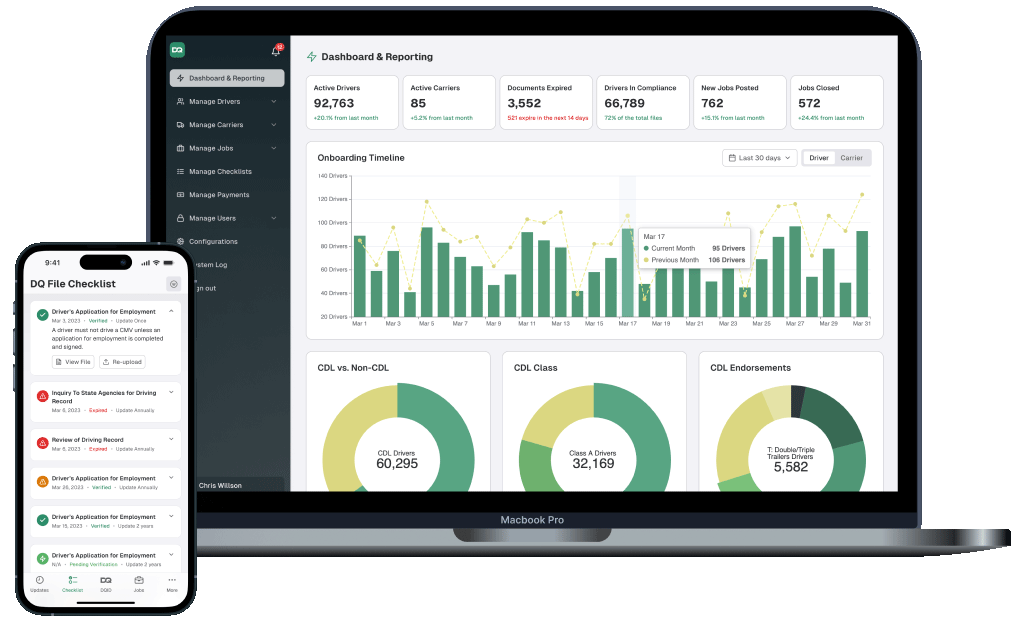
Join our community
Connect with industry professionals and stay updated on the latest in driver qualification management.
Stay Connected
Get industry updates, regulatory news, and safety insights sent to your inbox.