


How Technology Is Reshaping Fleet Onboarding and Record Management
Technology is transforming fleet onboarding and record management by reducing paperwork, automating compliance, strengthening safety, and improving visibility across teams. Fleets can now onboard faster, operate safer, and stay audit-ready with ease.

Adison Lubin
Nov 28, 2025Share:
Fleet operations have long relied on manual onboarding processes and paper-based documentation to manage drivers, vehicles, and compliance tasks. For years, fleets handled everything from license copies to medical certificates through physical files, spreadsheets, and in-person submission of documents.
While this approach worked in the past, the transportation sector now faces increasing pressure from regulatory bodies like the FMCSA and DOT. They are demanding stricter documentation, accurate driver qualification files, and timely verification of credentials.
In addition, fleets today are expanding at a much faster rate. More vehicles, more drivers, and more complex operations require onboarding processes that can scale effortlessly. This growing pressure has made modernized, technology-driven onboarding systems not just helpful but essential for long-term operational success. In this blog post, we’ll explore what digital fleet onboarding is, its benefits, and the penalties of non-compliance in fleet onboarding. Additionally, we’ll explore the features of the digital fleet onboarding system.
What is a Digital Fleet Onboarding System
Digital fleet onboarding refers to the entire process of bringing a new driver or vehicle into the fleet.
It includes:
- Collecting driver information
- Verifying documents
- Background checks
- Safety briefings
- Assigning vehicles
- Setting up driver profiles in systems
- Ensuring compliance steps are completed
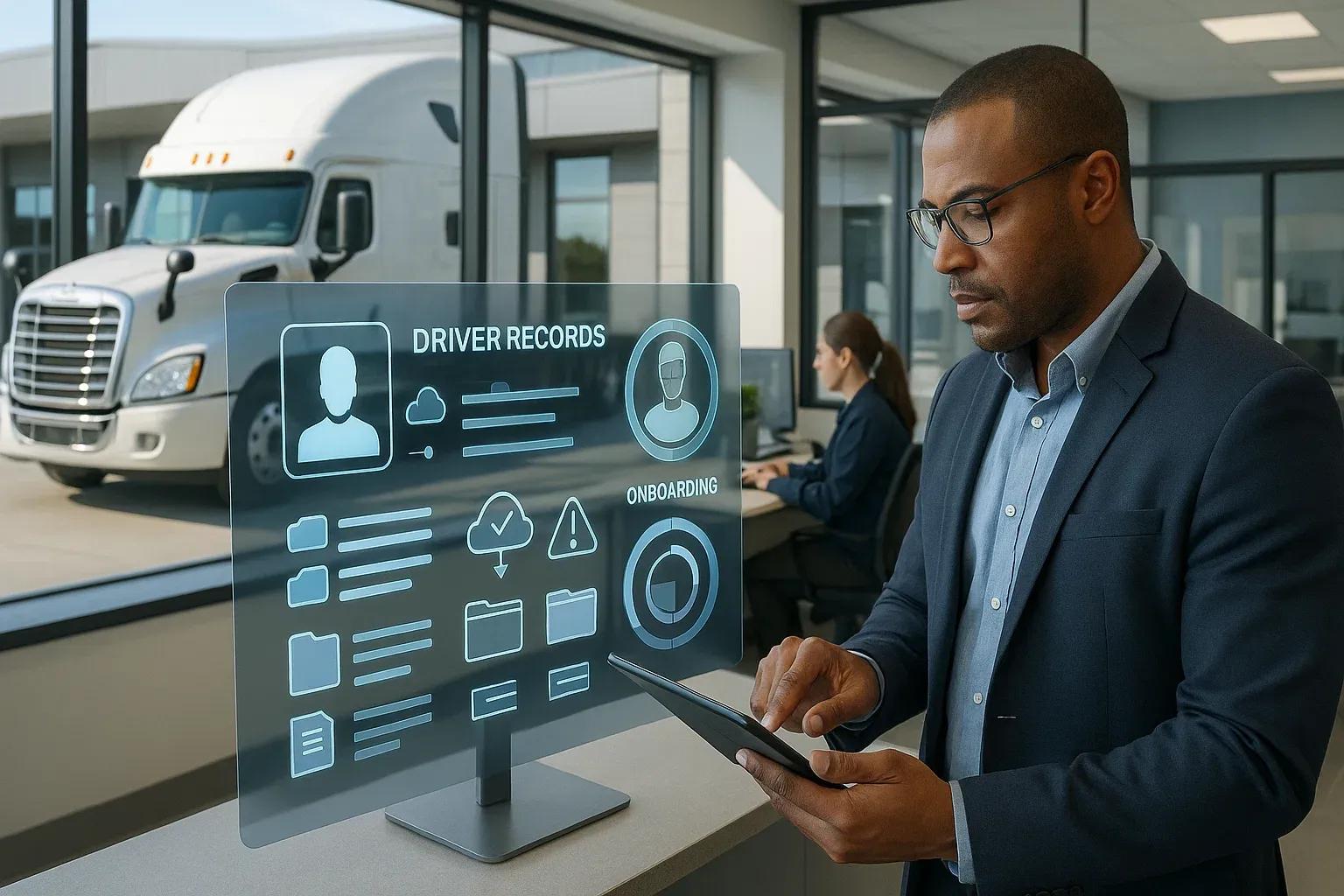
Instead of submitting physical copies of licenses, certificates, or forms, drivers can upload these documents directly through secure online portals. These systems organize everything in one place, reducing the back-and-forth communication that usually slows down onboarding.
Benefits of Digital Fleet Onboarding Systems
Digitizing the fleet onboarding process can be beneficial as it helps:
- Streamlines the entire onboarding process, significantly reducing manual paperwork and administrative workload.
- Improves accuracy by minimizing human errors in forms, documentation, and data entry.
- Accelerates driver deployment with faster document submission, verification, and approvals.
- Enhances compliance by automating reminders for expiring credentials and missing records.
- Provides centralized access to all driver documents, making it easier for managers to track progress and stay audit-ready.
- Strengthens transparency and communication between drivers, fleet managers, HR, and safety teams.
Penalties of Non-Compliance in Fleet Onboarding & Record Management
Failing to maintain accurate onboarding records and driver qualification files can lead to serious operational and financial consequences for fleets. These include:
- Costly FMCSA and DOT fines for missing, expired, or inaccurate driver qualification files (DQFs).
- Out-of-service orders stop drivers or vehicles from operating until documentation is corrected.
- Increased insurance premiums due to poor compliance records or repeated violations.
- Higher audit risk, with the potential for conditional or unsatisfactory safety ratings.
- Legal liability in case of accidents if the required documentation or training is missing or outdated.
- Damage to the company's reputation, leading to loss of contracts, clients, and driver trust.
Learn: The Impact of Non-Compliance on Fleet Operations and How to Avoid It
Features of Digital Fleet Onboarding
Digital onboarding streamlines paper-heavy tasks with fast, automated workflows. These features help fleets improve accuracy, speed, compliance, and overall operational efficiency.
Online Driver Application Submission
Modern onboarding platforms allow drivers to apply digitally, making the process faster, more organized, and accessible from any device. Applicants can fill out the required information, attach documents, and submit their profiles without paperwork or in-person visits.
This reduces delays, improves accuracy, and ensures fleets receive complete data from the start. As a result, fleets experience fewer administrative bottlenecks and can onboard drivers quickly while maintaining compliance and documentation standards.
Digital Document Upload (Licenses, IDs, Medical Certificates)
Drivers can securely upload all required documents, such as CDLs, medical certificates, identity proofs, and endorsements, directly through digital portals. This eliminates the need for physical copies and ensures every file is stored in a structured, centralized system. Uploaded documents can be verified instantly, reducing back-and-forth communication between drivers and managers.
The process also minimizes errors, prevents lost paperwork, and creates a complete digital archive of driver qualification files. With real-time access, fleet managers can ensure regulatory compliance and maintain up-to-date records without manual tracking or sending repeated reminders.
E-Signatures For Forms And Agreements
Electronic signatures streamline the completion of consent forms, agreements, acknowledgments, and onboarding documents. Drivers no longer need to print, sign, scan, or deliver paperwork physically. Instead, signatures are captured digitally with secure authentication, ensuring legal validity and reducing turnaround time. Fleet managers benefit from faster workflow completion and improved organization, and drivers enjoy a smoother onboarding experience. Overall, e-signatures eliminate unnecessary steps and support a fully digital onboarding environment.
Automated Form Filling
Platforms equipped with automation tools populate repetitive driver information across multiple forms, reducing manual entry and minimizing mistakes. Once basic details are entered, the system automatically syncs them wherever required, saving time for both drivers and fleet administrators.
It also reduces frustration for drivers, who often abandon long, redundant onboarding forms. Fleet teams gain cleaner records, improved accuracy, and faster review cycles. By removing repetitive data entry tasks, automated form filling significantly boosts onboarding efficiency.
Centralized Document Dashboard
A unified dashboard provides fleets with a complete view of all driver documents, submissions, and compliance requirements in one place. Managers can instantly see what’s missing, what’s complete, and what needs attention. Drivers have equal visibility into their own onboarding progress, eliminating confusion or repeated questions.
Moreover, centralized access ensures nothing is scattered across emails, folders, or spreadsheets. This structure supports faster decision-making, organized record-keeping, and streamlined collaboration across HR, safety, and compliance teams. With every document easily accessible, fleets remain audit-ready and better aligned operationally.
Automated Reminders For Missing Or Expiring Documents
Automated notifications ensure drivers stay compliant by reminding them of missing uploads or upcoming expirations for certifications, licenses, and medical records. These alerts help fleets avoid late submissions, violations, and potential penalties from regulatory bodies.
By reducing manual follow-ups, administrative teams save considerable time and avoid clerical errors. Drivers receive clear, timely guidance, preventing last-minute issues that delay onboarding or disrupt operations. Automation strengthens compliance, improves efficiency, and maintains up-to-date qualification files across the fleet.
Identity And Credential Verification
Digital systems speed up the verification of driver identities and credentials by checking uploaded documents for accuracy and authenticity. These tools validate licenses, endorsements, medical certificates, and other critical records to ensure they meet regulatory standards.
Automated verification reduces manual review times, prevents fraudulent documentation, and ensures only qualified drivers progress through onboarding. Fleet managers gain confidence in the accuracy of the information provided, reducing compliance risks and improving operational safety.
Integration With Background Checks And MVR Reports
Modern onboarding tools connect directly with background check providers and motor vehicle record (MVR) services, allowing fleets to retrieve key reports instantly. Instead of waiting days for updates, managers can access safety histories, driving violations, and criminal background results within the platform.
Additionally, improves decision-making and reduces delays in hiring qualified drivers. Integrated systems also store these reports alongside other documents, ensuring compliance and simplifying audits. Overall, automating these checks helps fleets reduce manual tasks and maintain consistent hiring standards across all onboarding activities.
Role-Based Access Controls
Access controls ensure that only authorized personnel can view, edit, or download sensitive driver information. Fleets may manage personal data, while safety teams access compliance-related documents, and drivers see only their own files. This layered access protects privacy, strengthens data security, and supports regulatory requirements for information handling.
It also reduces errors by preventing unauthorized or accidental changes to important records. Role-based permissions create a safer digital environment and promote accountability across teams involved in the onboarding process.
Mobile Onboarding For Drivers
Mobile access allows drivers to complete onboarding tasks directly from their smartphones—uploading documents, signing forms, checking status updates, and receiving reminders anytime, anywhere. This removes barriers for drivers who may not have access to a computer or who are frequently on the road.
With everything accessible from a mobile device, onboarding becomes faster, more convenient, and more driver-friendly. Fleets benefit from quicker turnaround times and fewer incomplete submissions. Mobile onboarding supports a modern, flexible experience that aligns with the fast-paced nature of transportation work.
Explore: Simplify Compliance in 2025: A Complete Driver Qualification File Guide
Conclusion
Technology is reshaping fleet onboarding and record management by making processes faster, more accurate, and more reliable. Digital platforms eliminate paperwork, reduce manual errors, automate compliance tracking, and streamline communication across all teams. These advancements help fleets onboard drivers efficiently, maintain strong documentation, and reduce risk during audits and inspections.
As the transportation industry becomes more complex, digital transformation is no longer optional—it’s essential for running safe, compliant, and high-performing fleet operations. Fleets that embrace technology today will be better equipped to meet the evolving demands of tomorrow, operating with greater confidence, clarity, and efficiency.
Share:
Start Empowering Your Fleet Today
Experience the power of Intelligent Compliance with a free, no-obligation demo and partner network walk-through. See firsthand how we can help you achieve higher compliance standards. Partner with us and elevate your fleet today.
Request a Demo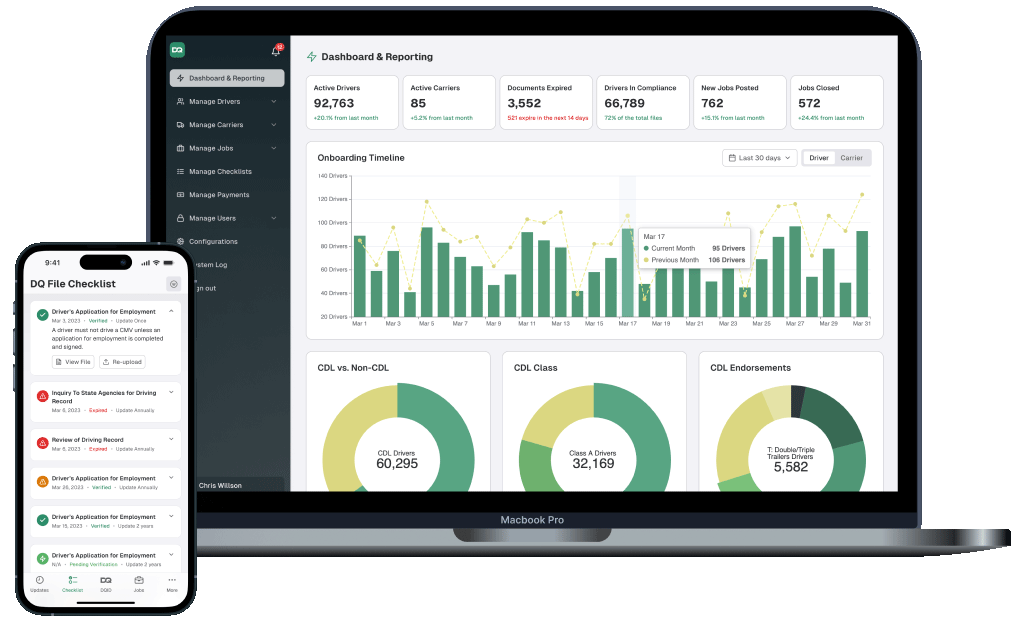
Join our community
Connect with industry professionals and stay updated on the latest in driver qualification management.
Stay Connected
Get industry updates, regulatory news, and safety insights sent to your inbox.