


Everything You Need to Know About Becoming a Truck Driver
Start your trucking career with this complete guide to becoming a truck driver. Learn about CDL requirements, training programs, career paths, specialized endorsements, and how to onboard efficiently using the DQid platform for faster job opportunities.


Jakob Rhiel Madsen
Mar 6, 2026Share:
Truck drivers are the backbone of the transportation industry. Truck driving is a vital profession that keeps supply chains moving and businesses running. From transporting food and retail products to construction materials and equipment, truck drivers play a key role in the global economy.
If you enjoy driving, value independence, and are looking for a career with steady demand, becoming a truck driver may be a great option. However, entering the trucking industry requires proper training, licensing, and an understanding of the responsibilities involved.
This guide explains everything you need to know about becoming a truck driver, including the qualifications, training process, licensing requirements, and career opportunities available in the industry.
Understanding the Role of a Truck Driver
Truck drivers transport goods from one location to another using commercial motor vehicles. While driving is the main responsibility, the job includes many other tasks that ensure cargo is delivered safely and on time.
A professional truck driver is responsible for:
- Transporting cargo across local, regional, or long-distance routes
- Inspecting the vehicle before and after trips to ensure it is safe to operate
- Securing cargo properly to prevent damage during transport
- Following traffic laws and federal transportation regulations
- Maintaining driving logs and delivery documentation
- Communicating with dispatchers and logistics teams
- Handling unexpected road conditions or delays
In many cases, drivers must also ensure that the cargo is loaded and unloaded safely, depending on the type of trucking job they have.
Because trucking supports industries such as retail, agriculture, manufacturing, and construction, the demand for qualified drivers remains strong in many regions.
Step 1: Meet the Basic Requirements
Before beginning the process of becoming a truck driver, you must meet several basic requirements.
While exact requirements may vary depending on the country or region, most trucking companies expect drivers to meet the following criteria:
Age Requirement
Drivers must usually be at least:
- 18 years old for intrastate driving (within the same state or region)
- 21 years old for interstate driving (across state or national borders)
Many trucking companies prefer hiring drivers who are at least 21 because interstate driving opportunities are more common.
Valid Driver’s License
You must already have a regular driver’s license before applying for commercial driver training.
Clean Driving Record
Employers typically review your driving history to ensure you have not committed serious traffic violations. A clean driving record demonstrates that you can operate vehicles responsibly.
Medical Examination
Truck drivers must pass a Department of Transportation (DOT) physical examination or an equivalent medical test depending on the country.
This exam checks for:
- Vision and hearing ability
- Blood pressure levels
- Physical fitness to operate heavy vehicles
- Any medical conditions that could impact safe driving
Drivers who pass the medical exam receive a medical certificate that allows them to operate commercial vehicles.
Drug and Background Screening
Most trucking companies require drivers to pass drug testing and background checks to ensure safety and regulatory compliance.
Step 2: Obtain a Commercial Learner’s Permit (CLP)
The first official step toward becoming a truck driver is obtaining a Commercial Learner’s Permit (CLP). This permit allows you to practice driving a commercial vehicle under the supervision of a licensed driver.
To obtain a CLP, you typically need to:
- Study the Commercial Driver’s License (CDL) manual provided by your state or licensing authority.
- Pass a written knowledge exam covering topics such as road safety, trucking regulations, and vehicle operation.
- Pass a vision test to confirm you can see clearly enough to drive safely.
- Provide identification documents and pay the required application fee.
Once you receive your CLP, you can begin practicing with a commercial vehicle while being supervised by an experienced CDL holder.
Step 3: Complete Entry-Level Driver Training (ELDT)
New truck drivers are required to complete Entry-Level Driver Training (ELDT) before they can take the CDL skills test.
ELDT ensures that new drivers receive standardized training that prepares them for real-world trucking conditions.
This training typically includes two main components:
Classroom Training
Classroom instruction focuses on theoretical knowledge such as:
- Traffic laws and trucking regulations
- Hours-of-Service (HOS) rules
- Vehicle systems and maintenance basics
- Cargo securement techniques
- Safety procedures and accident prevention
Behind-the-Wheel Training
Practical training allows students to gain real driving experience with commercial vehicles.
Drivers learn how to:
- Perform vehicle inspections
- Start, stop, and control large trucks safely
- Maneuver in tight spaces
- Back up and park commercial vehicles
- Drive in different road conditions
Training programs help students build confidence and prepare for the CDL skills test.
Step 4: Attend a Truck Driving School
Although some drivers train independently, many aspiring truck drivers enroll in professional truck driving schools to gain structured training.
Truck driving schools provide a combination of classroom education and hands-on driving practice.
Typical topics covered in truck driving programs include:
- Defensive driving techniques
- Truck safety procedures
- Federal transportation regulations
- Logbook and record management
- Trip planning and navigation
- Handling different types of cargo
Most training programs last between 3 and 8 weeks, although some extended programs offered by community colleges may last several months.
Many schools also help students prepare specifically for the CDL exam and may assist with job placement after graduation.
Step 5: Pass the Commercial Driver’s License (CDL) Skills Test
After completing training, you must pass the CDL skills test to become a licensed truck driver.
The CDL test is divided into three parts:
1. Pre-Trip Inspection Test
In this portion, you must demonstrate knowledge of the truck’s components and safety systems.
You will explain and inspect parts such as:
- Brakes
- Tires and wheels
- Lights and reflectors
- Steering mechanisms
- Coupling systems
This ensures you understand how to verify that the vehicle is safe before driving
2. Basic Vehicle Control Test
This test evaluates your ability to control the truck in confined spaces.
You may be required to perform maneuvers such as:
- Straight backing
- Offset backing
- Parallel parking
- Alley docking
These exercises demonstrate your ability to safely maneuver large vehicles.
3. Road Test
The final part of the CDL exam involves driving on public roads with an examiner.
During the test, the examiner evaluates your ability to:
- Follow traffic rules
- Use mirrors properly
- Change lanes safely
- Maintain proper speed and control
- Navigate intersections and turns
Passing all three sections of the CDL skills test qualifies you to receive your commercial driver’s license.
Step 6: Choose a Truck Driving Career Path
Once you obtain your CDL, you can begin exploring different types of trucking jobs.
Local Truck Driving
Local drivers operate within a specific city or region and typically return home every day. These jobs are ideal for drivers who want a predictable schedule.
Regional Truck Driving
Regional drivers operate within a few neighboring states or regions. They may spend several days on the road before returning home.
Over-the-Road (OTR) Driving
OTR drivers travel long distances across the country. Trips may last several days or weeks, but these positions often offer higher earning potential.
Specialized Trucking
Drivers with additional endorsements can transport specialized cargo such as:
- Hazardous materials
- Refrigerated goods
- Oversized loads
- Tanker cargo
Specialized trucking often offers higher pay due to the additional training and responsibility required.
Onboarding as a Driver Using the DQid Platform
For those looking to start a trucking career, modern technology can simplify the onboarding process. One platform making this easier is DQid, a digital platform designed to streamline driver recruitment and verification.
What is DQid?
DQid is a centralized platform that allows trucking companies to manage driver information, compliance, and recruitment digitally. Through DQid, drivers can submit their credentials, documents, and personal information securely, making it easier for companies to verify qualifications and hire efficiently.
How to Onboard as a Driver on DQid
1. Create an Account: Start by signing up on the DQid platform. You’ll need to provide basic information such as your name, contact details, and email address. Signup Here: https://dqid.com/driver/signup
2. Complete Profile and Certifications: Fill in details about your driving experience, endorsements (HAZMAT, doubles/triples, tankers), and other qualifications. Some companies may require additional digital training modules, which can often be completed directly through the platform.
3. Submit Required Documents: Upload important documents like:
- Driver’s license and CDL credentials
- Medical certification (DOT physical)
- Driving record and background check information
These documents are securely stored and verified by the platform.
4. Verification and Approval: Once your documents and profile are submitted, the platform allows trucking companies to review and verify your information. Upon approval, you can be assigned to available driving positions.
5. Start Driving: After onboarding, your profile is active and visible to trucking companies using the DQid platform. You can begin accepting assignments and start your driving career.
Benefits of Using DQid
- Simplified Paperwork: Submit all documents digitally instead of handling paper forms.
- Faster Onboarding: Verification is streamlined, reducing the time it takes to get hired.
- Secure Storage: Personal and professional information is securely managed.
- Easy Access to Jobs: Companies looking for drivers can see your profile and reach out for assignments.
By leveraging platforms like DQid, aspiring truck drivers can accelerate their entry into the industry and focus more on gaining on-road experience rather than navigating complex paperwork.
Share:
Start Empowering Your Fleet Today
Experience the power of Intelligent Compliance with a free, no-obligation demo and partner network walk-through. See firsthand how we can help you achieve higher compliance standards. Partner with us and elevate your fleet today.
Request a Demo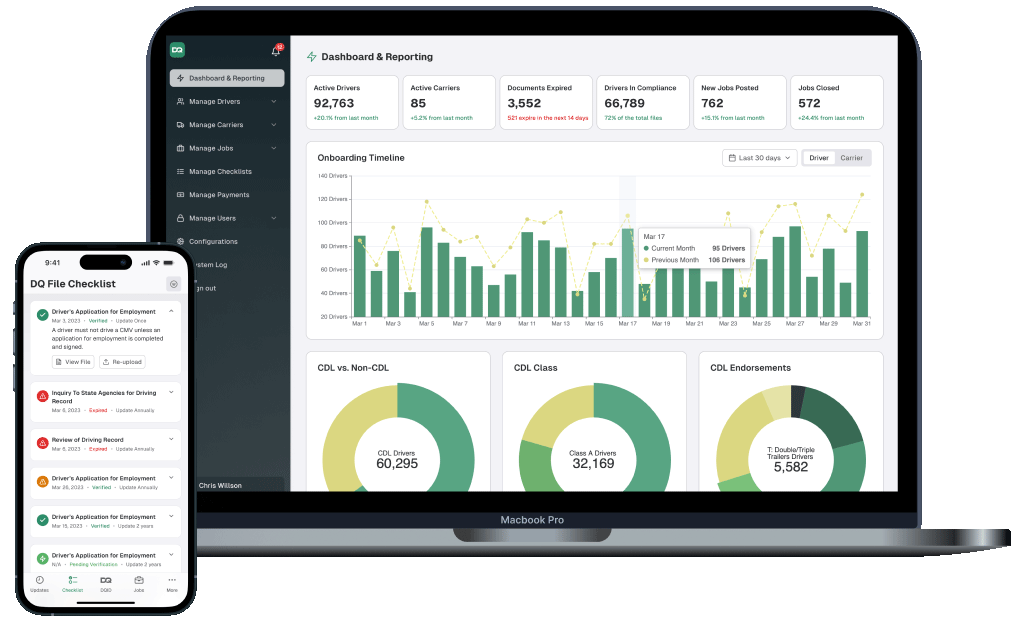
Join our community
Connect with industry professionals and stay updated on the latest in driver qualification management.
Stay Connected
Get industry updates, regulatory news, and safety insights sent to your inbox.